
Milhaud, Darius 1892 - 1974
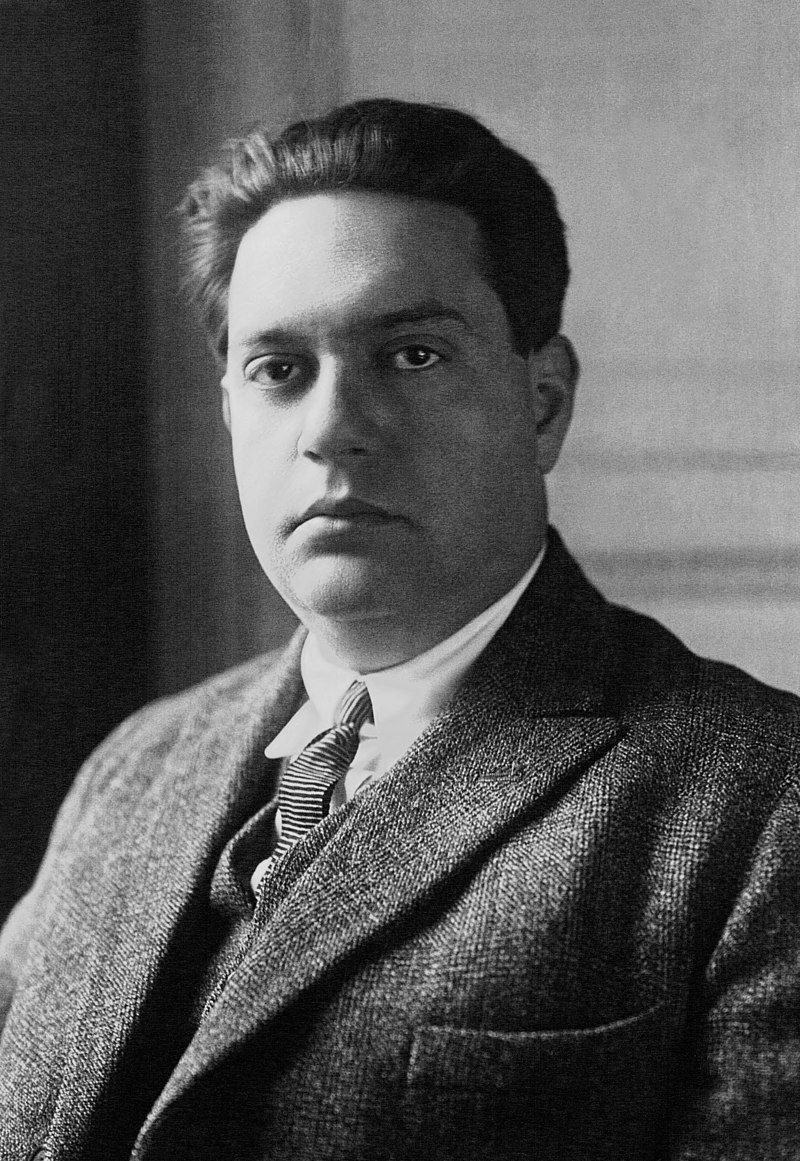
Author: Yano, Haruka
Last updated:January 1, 2010
Author: Yano, Haruka
Born into a wealthy Jewish family, Darius Milhaud grew up in the Provence region of France. He began playing the violin at age seven and soon after started composing. He entered the Paris Conservatoire as a violin major but gradually came to feel that composition was his true calling. During World War I, he was exempted from military service due to health reasons (he became severely disabled by rheumatoid arthritis, later confined to a wheelchair). When a friend, who was a diplomat, was assigned to Brazil, Milhaud accompanied him as his secretary. They lived in South America for about two years, and the unique atmosphere and musical rhythms they encountered there significantly influenced the young composer, which is clearly evident in his works. For instance, in his piano works, the finale of Scaramouche for two pianos would be a good example. Returning to Paris in November 1918, Milhaud became one of "Les Six." Two years later, in 1920, while in London for a performance of his works, Milhaud heard jazz for the first time, performed by Billy Arnold's Orchestra, and was deeply impressed. Upon returning home, he began collecting as much American popular music as he could find, which was very fashionable at the time, and immersed himself in it with his friends. In 1922, he embarked on a concert tour to America, and in 1923, he was inspired by hearing authentic Black jazz for the first time in Harlem, leading him to compose ballet music. It can be said that he was a composer who drew inspiration from various ethnic and folk musics encountered during his travels. At the beginning of his autobiography, Milhaud states, "I am a Frenchman from Provence, and by faith, I am a Jew." Just as he understood himself in this way, the memory of the tranquil landscapes of Provence remained central to his creativity, and the keyword "Provence" might be the most crucial for understanding Milhaud as a composer.
Works(68)
Concerto
concerto (7)
Concerto pour piano et orchestre No.1 Op.127 (3 pieces)
Composed in: 1933 Playing time: 13 min 50 sec
Concerto pour piano et orchestre No.2 Op.225 (3 pieces)
Composed in: 1941 Playing time: 13 min 50 sec
Concerto pour piano et orchestre No.3 Op.270 (3 pieces)
Composed in: 1946 Playing time: 19 min 00 sec
Concerto pour piano et orchestre No.4 Op.295 (3 pieces)
Composed in: 1949 Playing time: 19 min 40 sec
Concerto pour piano et orchestre No.5 Op.346 (3 pieces)
Composed in: 1955 Playing time: 21 min 30 sec
Concerto pour 2 pianos et 4 percussions Op.394 (3 pieces)
Composed in: 1961 Playing time: 20 min 10 sec
Chamber music (8)
Piano Solo
arrangement (1)
Cinq Grimaces pour le "Songe d'une nuit d'été" (5 pieces)
Composed in: 1929 Playing time: 4 min 00 sec
sonata (2)
pieces (13)
Trois Valses, Extraites du film “Madame Bovary” Op.128c (3 pieces)
Composed in: 1933 Playing time: 4 min 00 sec
polka (1)
Various works (15)
The Joys of Life – Homage to Watteau (Les Charmes de la vie – Hommage à Watteau) Op.360 (6 pieces)
Composed in: 1957
Choral en l’honneur d’Ignace Paderewski (Homage to Paderewski)
Composed in: 1941 Playing time: 2 min 00 sec
Piano Ensemble
pieces (3)
character pieces (2)
Various works (4)
Chamber Music